
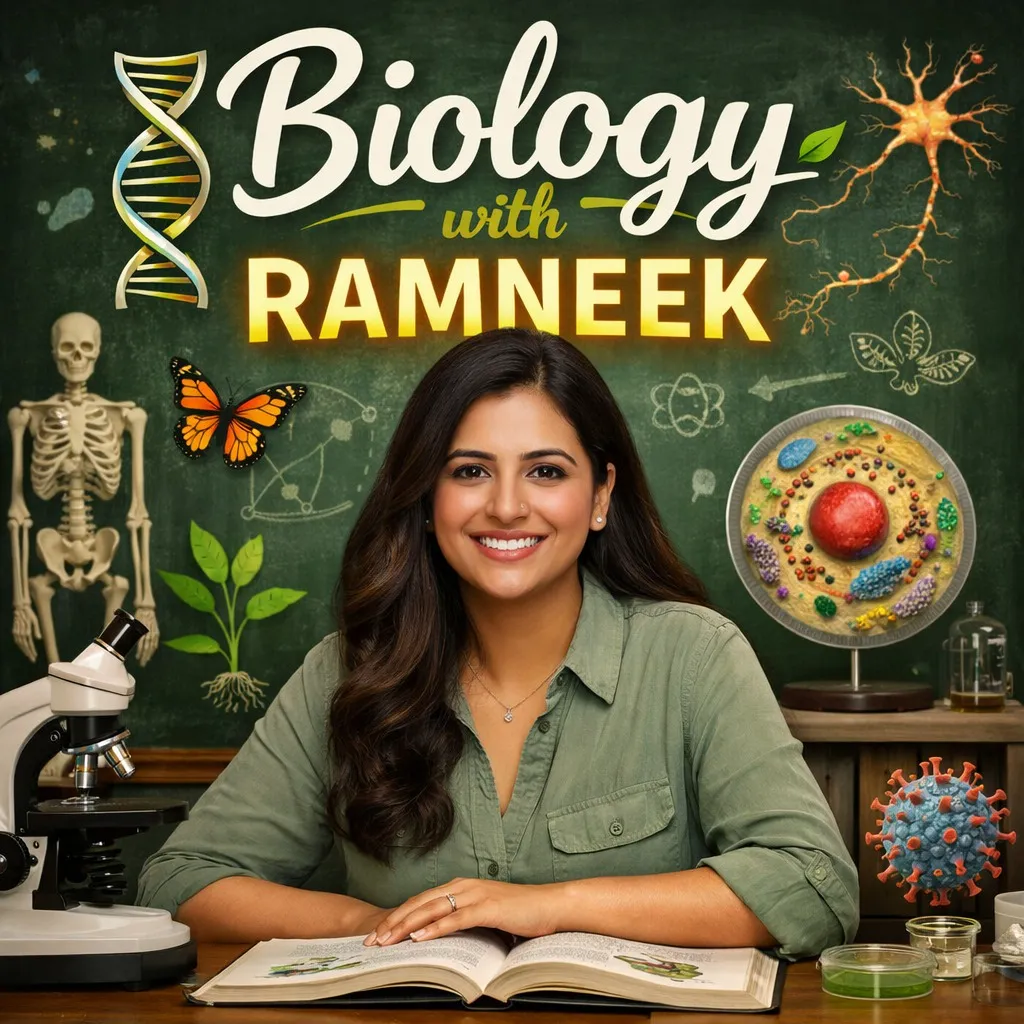
Ramneek kaur
Online
Skills :
About :
Ramneek Kaur is a dedicated tutor who focuses on making learning engaging and accessible. She teaches in English, Hindi, and Punjabi, ensuring that her students feel comfortable an…
Ramneek Kaur is a dedicated tutor who focuses on making learning engaging and accessible. She teaches in English, Hindi, and Punjabi, ensuring that her students feel comfortable and understood. Ramneek is passionate about clarifying complex topics and provides personalized support to help each student succeed. Her approachable style encourages open communication, allowing students to ask questions and express their thoughts freely. With her guidance, students can build confidence and achieve their academic goals.
Ramneek kaur
Online
Skills :
Ramneek Kaur is a dedicated tutor who focuses on making learning engaging and accessible. She teaches in English, Hindi, and Punjabi, ensuring that her students feel comfortable an...
Ramneek Kaur is a dedicated tutor who focuses on making learning engaging and accessible. She teaches in English, Hindi, and Punjabi, ensuring that her students feel comfortable and understood. Ramneek is passionate about clarifying complex topics and provides personalized support to help each student succeed. Her approachable style encourages open communication, allowing students to ask questions and express their thoughts freely. With her guidance, students can build confidence and achieve their academic goals.
FindMyGuru is a tutor discovery platform that helps students find and connect with experienced tutors and institutes across a wide range of subjects and skills. Students can explore tutor profiles, compare expertise, and contact tutors directly for online or in-person learning.FindMyGuru facilitates discovery and connections between students and tutors or institutes. All classes and learning arrangements are handled directly between students and the respective tutors or institutes
Courses by Ramneek kaur
Online
6 Month
English, Hindi, Punjabi
Patiala, Patiala, Patiala
On Call
Week Days / Weekends
Course Content
What Student Will Learn
Unit-I Diversity of Living Organisms
Chapter-1: The Living World
Biodiversity; Need for classification; three domains of life; taxonomy and systematics;
concept of species and taxonomical hierarchy; binomial nomenclature
Chapter-2: Biological Classification
Five kingdom classification; Salient features and classification of Monera, Protista and
Fungi into major groups; Lichens, Viruses and Viroids.
Chapter-3: Plant Kingdom
Classification of plants into major groups; Salient and distinguishing features and a few
examples of Algae, Bryophyta, Pteridophyta, Gymnospermae and Angiosperms.
Chapter-4: Animal Kingdom
Salient features and classification of animals, non-chordates up to phyla level and
chordates upto class level (salient features and at a few examples of each category).
(No live animals or specimen should be displayed.)
Unit-II Structural Organization in Plants and Animals
Chapter-5: Morphology of Flowering Plants
Morphology of different parts of flowering plants: root, stem, leaf, inflorescence, flower,
fruit and seed. Description of family Solanaceae
Chapter-6: Anatomy of Flowering Plants
Anatomy and functions of tissue systems in dicots and monocots.
Chapter-7: Structural Organisation in Animals
Morphology, Anatomy and functions of different systems (digestive, circulatory, respiratory,
nervous and reproductive) of frog.
Unit-III Cell: Structure and Function
Chapter-8: Cell-The Unit of Life
Cell theory and cell as the basic unit of life, structure of prokaryotic and eukaryotic cells;
Plant cell and animal cell; cell envelope; cell membrane, cell wall; cell organelles - structure
and function; endomembrane system, endoplasmic reticulum, golgi bodies, lysosomes,
vacuoles, mitochondria, ribosomes, plastids, microbodies; cytoskeleton, cilia, flagella,
centrioles (ultrastructure and function); nucleus.
Chapter-9: Biomolecules
Chemical constituents of living cells: biomolecules, structure and function of proteins,
carbohydrates, lipids, and nucleic acids; Enzyme - types, properties, enzyme action.
(Topics excluded: Nature of Bond Linking Monomers in a Polymer, Dynamic State of Body
Constituents Concept of Metabolism, Metabolic Basis of Living, The Living State)
Chapter-10: Cell Cycle and Cell Division
Cell cycle, mitosis, meiosis and their significance
Unit-IV Plant Physiology
Chapter-11: Photosynthesis in Higher Plants
Photosynthesis as a means of autotrophic nutrition; site of photosynthesis, pigments
involved in photosynthesis (elementary idea); photochemical and biosynthetic phases of
photosynthesis; cyclic and non-cyclic photophosphorylation; chemiosmotic hypothesis;
photorespiration; C3 and C4 pathways; factors affecting photosynthesis.
Chapter-12: Respiration in Plants
Exchange of gases; cellular respiration - glycolysis, fermentation (anaerobic), TCA cycle
and electron transport system (aerobic); energy relations - number of ATP molecules
generated; amphibolic pathways; respiratory quotient.
Chapter-13: Plant - Growth and Development
Seed germination; phases of plant growth and plant growth rate; conditions of growth;
differentiation, dedifferentiation and redifferentiation; sequence of developmental
processes in a plant cell; plant growth regulators - auxin, gibberellin, cytokinin, ethylene,
ABA.
Unit-V Human Physiology
Chapter-14: Breathing and Exchange of Gases
Respiratory organs in animals (recall only); Respiratory system in humans; mechanism of
breathing and its regulation in humans - exchange of gases, transport of gases and
regulation of respiration, respiratory volume; disorders related to respiration - asthma,
emphysema, occupational respiratory disorders.
Chapter-15: Body Fluids and Circulation
Composition of blood, blood groups, coagulation of blood; composition of lymph and its
function; human circulatory system - Structure of human heart and blood vessels; cardiac
cycle, cardiac output, ECG; double circulation; regulation of cardiac activity; disorders of
circulatory system - hypertension, coronary artery disease, angina pectoris, heart failure.
Chapter-16: Excretory Products and their Elimination
Modes of excretion - ammonotelism, ureotelism, uricotelism; human excretory system –
structure and function; urine formation, osmoregulation; regulation of kidney function -
renin - angiotensin, atrial natriuretic factor, ADH and diabetes insipidus; role of other
organs in excretion; disorders - uremia, renal failure, renal calculi, nephritis; dialysis and
artificial kidney, kidney transplant.
Chapter-17: Locomotion and Movement
Types of movement - ciliary, flagellar, muscular; skeletal muscle, contractile proteins and
muscle contraction; skeletal system and its functions; joints; disorders of muscular and
skeletal systems - myasthenia gravis, tetany, muscular dystrophy, arthritis, osteoporosis,
gout.
Chapter-18: Neural Control and Coordination
Neuron and nerves; Nervous system in humans - central nervous system; peripheral
nervous system and visceral nervous system; generation and conduction of nerve impulse
Chapter- 19: Chemical Coordination and Integration
Endocrine glands and hormones; human endocrine system - hypothalamus, pituitary,
pineal, thyroid, parathyroid, adrenal, pancreas, gonads; mechanism of hormone action
(elementary idea); role of hormones as messengers and regulators, hypo - and
hyperactivity and related disorders; dwarfism, acromegaly, cretinism, goiter, exophthalmic
goitre, diabetes, Addison's disease.